

Defense: Private Equity’s New 45% Margin Frontier
In the financial world, disruptions often are digital — a new algorithm or a faster payment rail. But in 2026, the most violent disruption is occurring in the physical world.
Consider a recent striking paradox: a $10,000 autonomous drone can now threaten a multi-billion dollar landmark like the Burj Khalifa. To counter it, traditional defense systems might deploy an F-16 or a missile battery. Yet, those jets often carry only a few interceptors, each costing millions. The math does not work.
Modern warfare has hit a bottleneck where the cost to defend has become exponentially higher than the cost to attack.
This asymmetry has triggered a global shift where over 180 nations are simultaneously realizing that legacy military hardware of tanks, manned aviation, and heavy artillery is a poor fit for a new era of decentralized conflict. According to DefenceNews, defense tech funding hit a record of nearly $50B in 2025, almost doubling from the previous year. This technological reset of national security is moving the center of gravity for institutional capital.
The Margin Disruption
The significant “so what?” for investors lies in the collapse of the legacy defense business model. Traditional defense primes operate on 8–10% gross margins with decades-long development cycles. They were built for a different era.
Challengers like Anduril Industries and Shield AI are rewriting the economics of conflict. By using a software-first approach and private equity logic, these firms report estimated gross margins of 40–45%. In 2026, the battleground has shifted from prototyping to manufacturing scale. Anduril’s Arsenal-1 facility is designed to turn venture capital into repeatable, mass-produced hardware — and the value of this pivot is shown in the raise of $2.5B at a $30.5B valuation in mid-2025.
In 2026, the market is pricing defense challengers as AI labs rather than hardware vendors, removing the valuation ceiling.
The market is responding with record liquidity. Defense-tech exits jumped to $54.4 billion in 2025, more than tripling year-on-year. The acquisition of Groq by Nvidia for €20 billion signals that the semiconductor world now views military-grade AI hardware as a core vertical.
The Global Brain Engine
While the capital is often American, the “brain” of the defense is increasingly global.
Israel remains the CyberAI benchmark. The recent exits of Wiz ($32B) and CyberArk ($25B) represented 82% of the total M&A value in Israel over the 2024-2025 period. This is the result of the Unit 8200 pipeline — Israel’s elite military intelligence unit that serves as an incubator for AI-native security startups.
Simultaneously, we are noting the rise of India alpha. US and Indian VCs have formed a $1 billion alliance to fund deep tech. With a reopened IPO window in India and an unparalleled pool of AI engineers, the region has become a flywheel for autonomous hardware. For the institutional investor, these hubs represent a de-risked entry point: proven talent and government-backed validation.
The Capital Stack Pivot
Defense tech requires a different kind of firepower than typical SaaS. These companies have longer sales cycles and massive capital requirements for manufacturing facilities. Consequently, we are seeing a significant evolution in the capital stack.
Venture debt and private credit have moved from a “last resort” to a core strategic lever. According to SVB report, venture debt deal value in Europe is projected to be up 42% compared to 2023. Private credit funds like Pinegrove and Partners for Growth are rushing in to provide the non-dilutive capital needed for manufacturing scale.
By using private debt to build physical arsenals, firms preserve equity upside for future growth rounds.
This metric is critical for secondary market participants.
Dual-Use Infrastructure of Space and Robotics
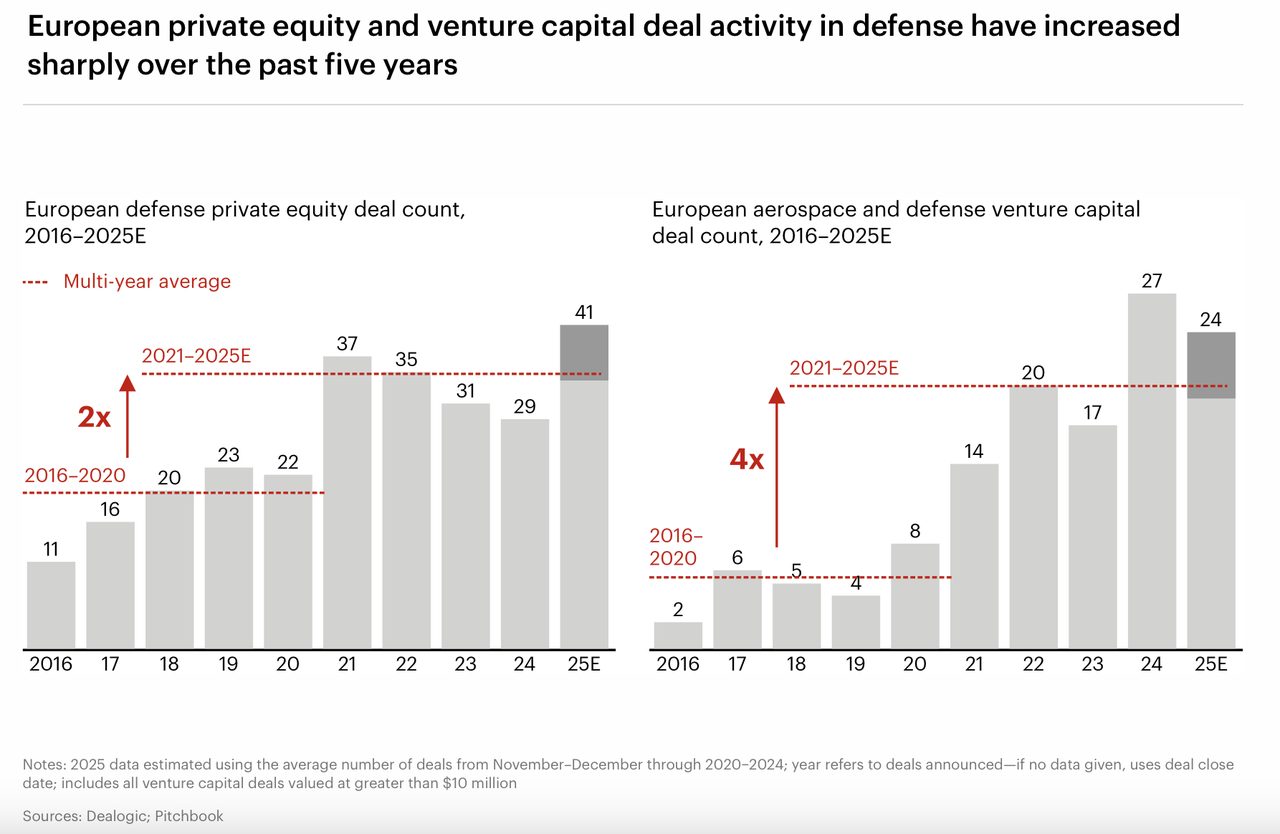
The integration of space and robotics into the defense stack has erased old sector boundaries. Emergence of “drone wall” coalitions and joint ventures like Project Bromo unite aerospace giants with agile software labs. As Bain & Company highlights, venture deals in European defense have nearly quadrupled in five years.
Space is no longer the domain of scientific prestige. The integration of low-earth orbit satellite constellations has transformed space into the high ground of the modern defense stack. Intelligence, surveillance, and reconnaissance (ISR) are now delivered as a service by private firms. LEO satellite constellations now provide the primary communication layer for conflict zones, erasing the distinction between a commercial service and a military asset. Firms like Firefly Aerospace and Voyager have become essential components of this infrastructure.
Robotics represents the physical execution of this stack. While retail investors focus on the “humanoid hype,” sophisticated capital is targeting autonomous systems that manage mission-critical workflows.
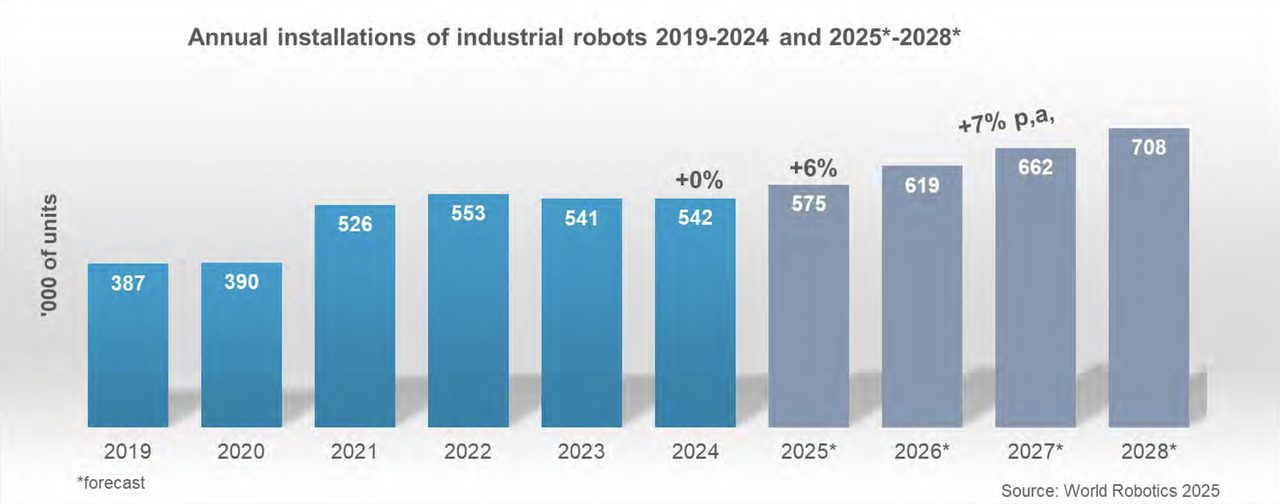
As industrial robot installations hit record highs, the boundary between a warehouse robot and a battlefield surface drone has disappeared.
If a company owns the “hand” (robotics) and the “brain” (AI), they control the most valuable mission-critical workflows in the digital age.
Ethical Realignment
Perhaps the most profound shift is cultural. For years, defense was a restricted category for many LPs due to ethical or ESG concerns. That barrier has collapsed.
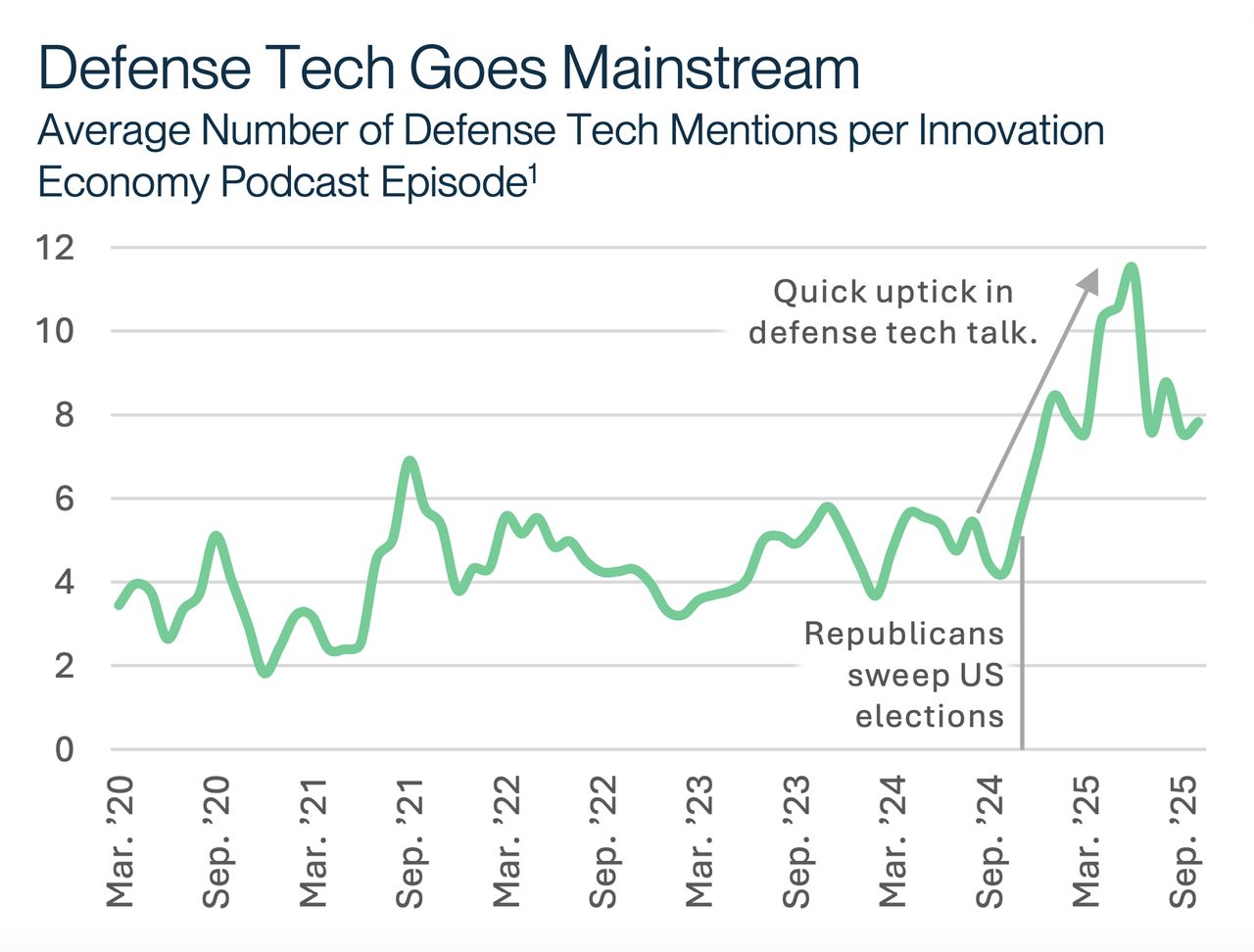
Jason Saltzman of CB Insights reports that the number of firms actively investing in defense tech increased 31% in 2025. Mainstream venture has reframed defense not as fueling conflict, but as supporting democratic values and technological sovereignty. This moral realignment has unlocked billions in dry powder from pension funds and endowments that were previously sidelined.
Secondary Intelligence as a Sourcing Tool
In 2026, execution, not just invention, determines returns. Infrastructure companies are choosing to stay private longer to protect their intellectual property and maintain the “hardware-software loop” away from public scrutiny.
By the time these firms reach an IPO, the “infrastructure alpha” has often been harvested. This is where the private network becomes a diagnostic tool.
Private network signals allow investors to identify the physical capital deployment and verify manufacturing throughput.
In a world where 75% of defense tech funding growth occurred in just 12 months, the advantage belongs to those who can verify opportunity before it hits the headlines.
Takeaway
The defense renaissance proves that the most valuable pipes in the modern world are those that protect and connect nations. The sector has moved from a niche interest to an entry fee for a diversified portfolio.
We are moving from liquidity-by-hype back to a world of liquidity-by-strategic-necessity. The battlefield has become the laboratory for AI and robotics. To win in this cycle, stop watching the news; start looking at who owns the physical infrastructure and the private networks that provide access to it.
Oleg Ivanov, COO & Co-founder SecondLane